
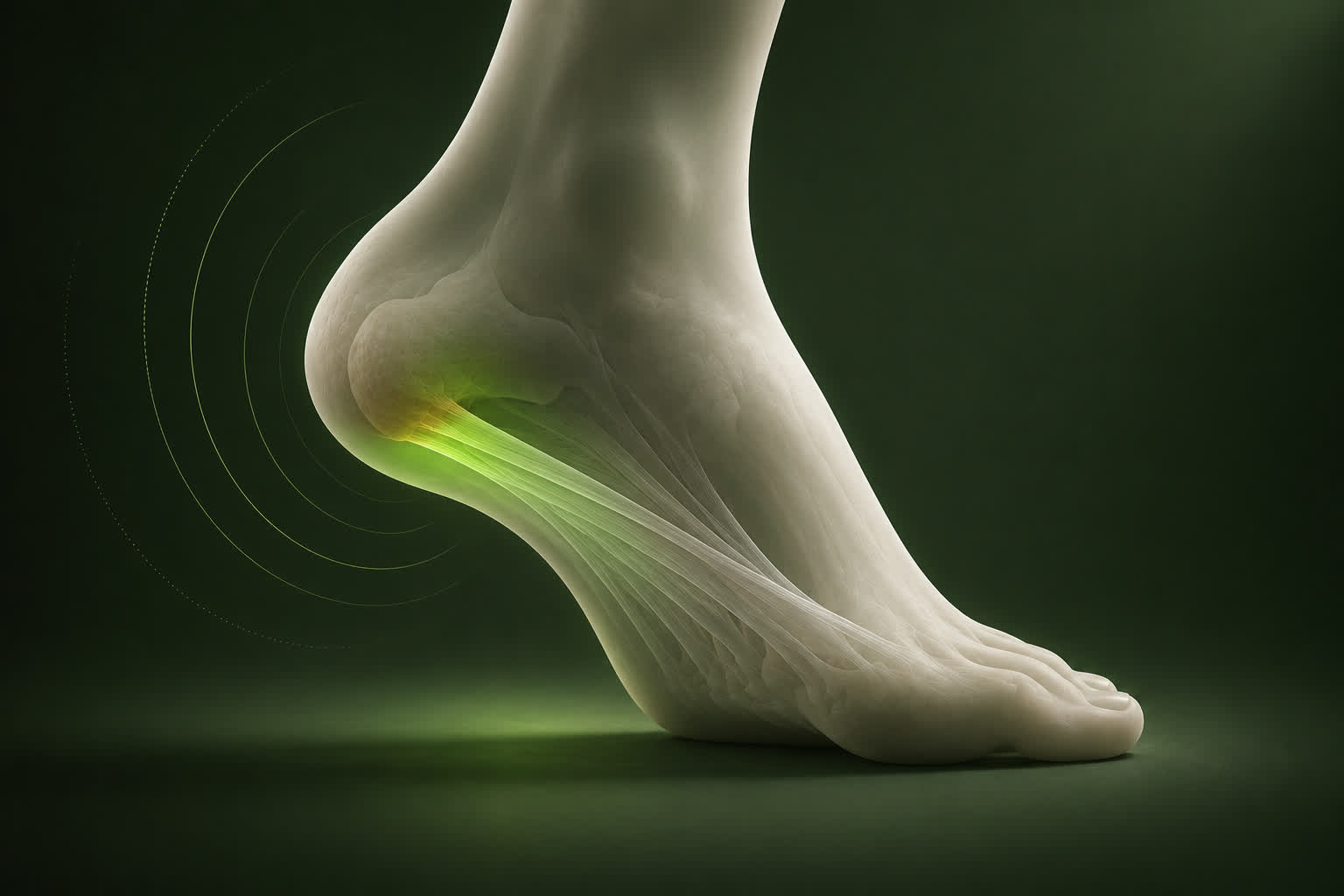
Heel pain is one of the most common reasons people see a podiatrist, and one of the most treatable once the cause is clear. The heel can hurt for several different reasons, and the right treatment depends on which one it is.
Signs and Symptoms
Heel pain shows in different ways depending on the cause. It might be a sharp, stabbing pain under the heel with your first steps in the morning that eases as you move, a deep ache that builds during or after activity, or tenderness and stiffness at the back of the heel. Knowing exactly where and when it hurts is a big part of pinning down what is going on.
What Causes Heel Pain
- Plantar fasciitis, causing sharp pain with the first steps of the day
- Overuse, with pain that builds during or after activity
- Achilles and other tendon problems at the back of the heel
- Less commonly, nerve or stress-related problems
Because heel pain is often mechanical, working out the cause is the key to treating it, which we cover in what causes heel pain and how it is treated.
How We Assess Heel Pain
We ask when the pain started, where exactly it is, and what makes it better or worse, then examine the heel and look at how your foot loads when you stand and walk. Most heel pain is mechanical, so understanding how your foot moves is what tells us why the tissue is being overloaded and how to take the strain off it.
How We Treat Heel Pain
Once the cause is clear, we match the treatment to it. That commonly includes footwear advice, custom orthotics, a targeted stretching and loading programme, and measures to settle the painful tissue while the cause is addressed. The same biomechanical approach underpins our sports podiatry work, and most people improve steadily with the right plan rather than needing anything drastic.
When to See Us About Heel Pain
See a podiatrist if heel pain lasts more than a couple of weeks, keeps returning when you are active, or is stopping you doing what you want. Early treatment usually resolves it faster and stops it becoming a long-term problem that is harder to shift.
Keeping Heel Pain From Returning
Once the pain has settled, the aim is to keep it away. That usually means the right footwear, keeping up the stretching and loading work that got you better, and building activity gradually rather than in sudden jumps. We set you up with a simple routine so a one-off problem does not become a recurring one.
Why Choose Advanced Footcare for Heel Pain
- A proper diagnosis first, so treatment targets the real cause
- Biomechanical assessment and gait analysis in-house
- A named, HCPC-registered clinician throughout your care
- Custom orthotics and a targeted plan, not a one-size-fits-all fix
- Honest timescales and clear advice on staying active
Call 01306 883 332 or book an appointment and we will find the real cause of your heel pain and treat it.
Frequently asked questions.
What is the most common cause of heel pain?
Plantar fasciitis, inflammation of the tissue along the sole, is the most common cause. It classically causes sharp heel pain with the first steps of the day that eases as you move. Other causes include overuse, heel spurs and problems in the surrounding tendons.
Will heel pain go away on its own?
Some mild heel pain settles with rest and sensible footwear, but pain that persists for weeks or returns whenever you are active usually needs proper assessment and treatment. The longer it is left, the more entrenched it can become.
How do you treat heel pain?
Treatment depends on the cause. It commonly includes footwear advice, orthotics to support the foot, stretching and other targeted measures. We identify what is driving your heel pain and match the treatment to it.
How long does heel pain take to settle?
It depends on the cause and how long it has been there, but most people improve steadily over a few weeks with the right plan. Heel pain that has been ignored for months can take longer, which is why early treatment is worth it.
Can I keep exercising with heel pain?
Often yes, but usually with some changes to load, footwear or surface while the tissue settles. We will advise what is safe to continue so you stay active without making it worse.
Our team
Care from named, HCPC-registered specialists.
Every patient is looked after by a named clinician who sees them through from the first assessment to treatment and follow-up, so nothing gets lost between appointments. Get to know the team who will be looking after your feet.
Meet the team →


INTERACTIVE APPOINTMENT GUIDE
Find the right appointment
We'll guide you to the most appropriate clinician in around two minutes using our interactive foot guide.
Your foot
Drag to turn · click to pin
Explore your foot
Select an area of the foot
Rotate the model and choose the area that's troubling you. We'll show the conditions we most often see there and how we treat them.
Drag to rotate the model
Or let it auto-rotate to preview
Click a highlighted area to explore
OTHER SERVICES